Resveratrol
Trans-Resveratrol
The Longevity Activator
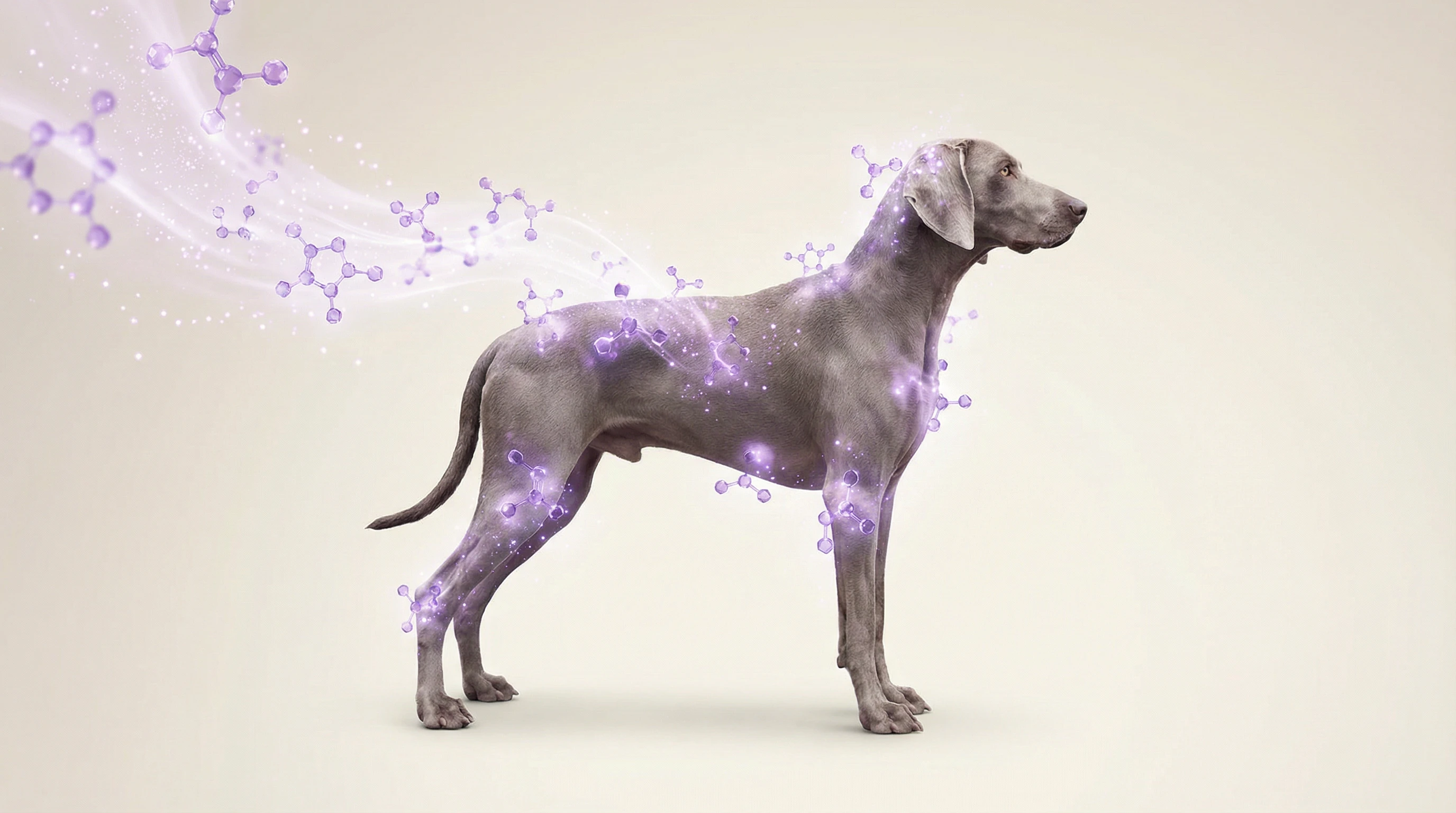
Resveratrol is a powerful polyphenol found in red grapes, berries, and peanuts. It gained fame for its ability to activate sirtuins—proteins often called 'longevity genes' that regulate cellular health, metabolism, and stress resistance. Resveratrol mimics some effects of caloric restriction, one of the most robust interventions known to extend lifespan.
Per Chew
5 mg
Key Benefits
Discover how Resveratrol supports your dog's health and longevity
Sirtuin Activation
Activates SIRT1 and other sirtuins, triggering cellular pathways associated with longevity, DNA repair, and metabolic health.
Powerful Antioxidant
Neutralizes free radicals and enhances the body's own antioxidant systems, providing comprehensive cellular protection.
Cardiovascular Support
Supports healthy blood vessel function, blood flow, and cardiovascular health through multiple mechanisms.
Healthy Inflammatory Response
Modulates inflammatory pathways, supporting balanced inflammation and tissue health throughout the body.
See How Resveratrol Works
Watch this short animation to understand how Resveratrol supports your dog's health at the cellular level
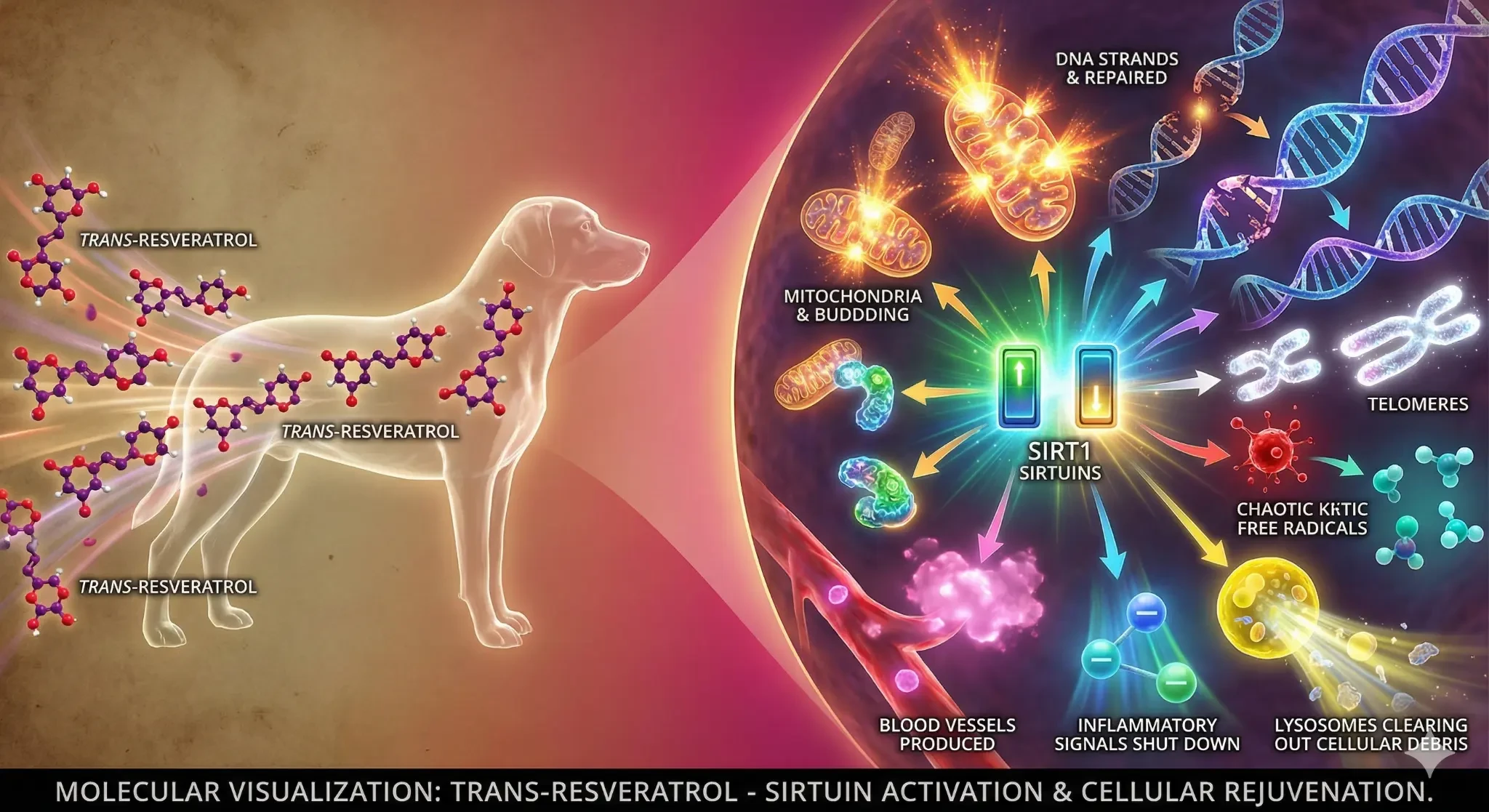
Scientific animation showing the mechanism of action of Trans-Resveratrol
How It Works
Resveratrol activates sirtuins, particularly SIRT1, which regulate DNA repair, metabolism, and cellular stress responses. This mimics some benefits of caloric restriction without reducing food intake. Resveratrol also works as a direct antioxidant and enhances the body's endogenous antioxidant systems (glutathione, SOD, catalase). It accumulates in tissues including the brain, providing systemic protection.
Works Best With:
Dosage Information
Timing: Can be given any time, with or without food
Works synergistically with NMN—resveratrol activates sirtuins while NMN provides the NAD+ they need to function.
Safety Profile
Resveratrol has been extensively studied and is well-tolerated. It's naturally present in foods like grapes and berries. No significant adverse effects have been reported at supplemental doses. Trans-resveratrol is the most bioactive and studied form.
Research & Citations
Scientific studies supporting the benefits of Resveratrol
Resveratrol Improves Health and Survival of Mice on a High-Calorie Diet
Baur JA, Pearson KJ, Price NL, et al.
Nature, 2006
Landmark study showing resveratrol's protective effects and sirtuin activation.
View StudySmall Molecule Activators of Sirtuins Extend Saccharomyces cerevisiae Lifespan
Howitz KT, Bitterman KJ, Cohen HY, et al.
Nature, 2003
Foundational research identifying resveratrol as a sirtuin activator.
View StudyResveratrol Delays Age-Related Deterioration and Mimics Transcriptional Aspects of Dietary Restriction without Extending Life Span
Pearson KJ, Baur JA, Lewis KN, et al.
Cell Metabolism, 2008
Demonstrated resveratrol's ability to mimic caloric restriction benefits.
View StudyLearn More About Resveratrol
Dive deeper with our science-backed articles

Explore More Ingredients
Discover the complete Pawdagen formula